You already know the failure mode. Your team spends four hours doing something outdoors, everybody says it was great, and by Tuesday nobody mentions it again. We host corporate groups up here, and we’ve watched which activities survive that Tuesday, and the difference usually comes down to how much of the schedule you’re willing to hand over.
Key Takeaways
- The stress payoff per minute peaks somewhere between twenty and thirty minutes outdoors, so unscheduled trail time is doing work even when it looks like nothing.
- Pick backward from whatever is broken on your team.
- Phones off, or the exercise is theater.
- Physical activities and quiet ones do different jobs and belong in the same day, alternating.
- Twenty minutes of debrief the same evening will outlast an hour of it a week later, so protect that slot.
- Budget benchmarks published for 2026 run from about $500 to $6,500 a head, and airfare accounts for most of that gap.
What Changed for Corporate Retreats in 2026
Two forces landed at once this year. Return-to-office mandates made in-person time scarcer, and the cost of gathering people went up. Every offsite now sits under a harder budget question than it faced three years ago.
Published planner benchmarks for 2026 spread from roughly $500 to $6,500 per person, and that range only becomes useful once you pull airfare out of it. Drive-to properties within about three hours of where most of your team already lives have been winning on the math, and they buy back a travel day on top of the savings. When you call a venue, ask how many groups they hosted last season before you ask what they charge. We run corporate events here alongside weddings, and the practice shows up in the small logistics.
Why Outdoor Team Building Works
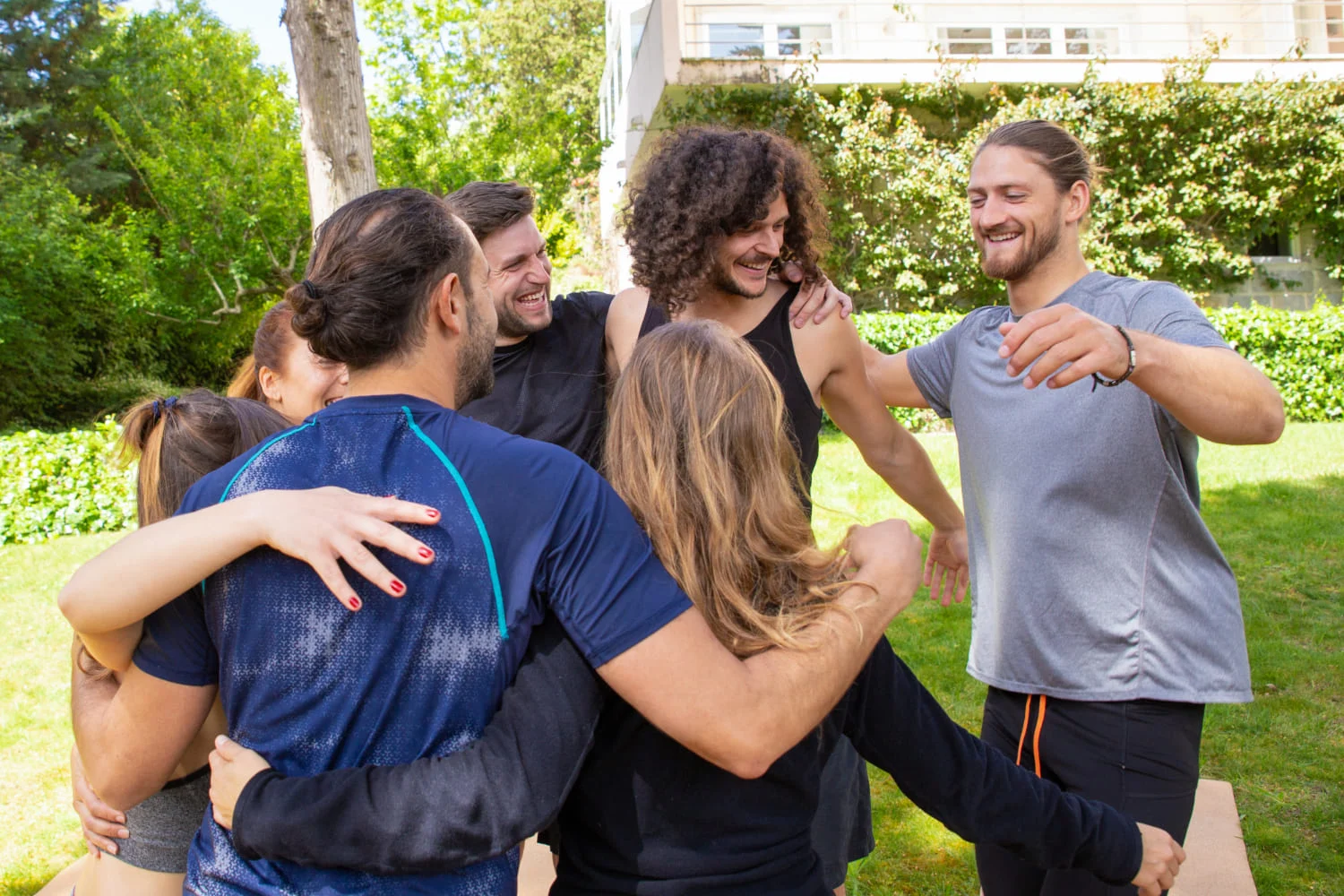
Some of the benefit shows up before you’ve scheduled anything at all. Saliva samples from three dozen city dwellers showed the stress payoff per minute peaking between twenty and thirty minutes outside. Returns keep accruing past that point at a slower rate, and nobody had to run an icebreaker to get them.
Thinking moves on a longer clock. Hikers four days into a backpacking trip, phones surrendered at the trailhead, scored 50 percent higher on a creative problem-solving test than a comparison group tested before setting out. Those were two different sets of people, not the same group measured twice, so we’d take the number as suggestive and leave it there. Four days without notifications does seem to change how a brain handles an open question.
None of this rescues a bad agenda. It does mean the ground is already doing some of your work, and that whatever you schedule has to beat sitting quietly in a field, a bar set higher than most agendas assume.
Eight Outdoor Team Building Activities We’d Run in 2026
The best outdoor team building activities pair physical shared tasks with quiet blocks that reset the group. Walking one-on-ones, map-and-compass route challenges, land restoration work, and open-fire cooking build interdependence. Solo sits and stargazing lower the temperature between them. Alternate the two across a day.
Four Outdoor Activities That Put the Team to Work
1. Walking One-on-Ones on a Rotating Trail Loop
Pair people up, send them down a trail, ring a bell every twenty minutes, then rotate. After three rotations everybody has had a real conversation with three colleagues they’d normally just nod at by the coffee machine.
Side by side works better than across a table for anything awkward. There’s no eye contact to manage, and a pause just reads as walking. We’d pair across departments where you can, give each pair one prompt they can answer without rehearsing, and collect nothing afterward. Three that work: what part of your job would you drop tomorrow if nobody noticed, what does your team think mine does all day, and what’s the last call you changed your mind about at work.
2. Map and Compass Route Challenge, No Phones
One map, one compass, a landmark two miles off, four small teams, no GPS. A leader appoints themselves within ninety seconds. Twenty minutes later, a quieter engineer works out that the group is heading the wrong way and has to decide whether to say so out loud, and that hesitation is the whole exercise.
Route-finding under mild uncertainty leans on the same habits a team uses in a product review. Debrief on the hesitation and let the finish times go.
3. Trail and Creek Restoration Work Party
Trail repair, or pulling invasives, or planting along a creek bank. Two hours of shared labor toward something that stays behind after the vans pull out.
Skeptical teams take to this better than they take to anything polished, because there’s nothing here to perform. A wheelbarrow, a slope, and the labor sorts itself out.
Restoration work runs year-round on plenty of mountain properties, ours included, and fifteen people can move serious material in a morning. Talk to your venue early. Some sites can’t absorb volunteers safely, and others carry permit conditions on what gets cut or planted.
4. Open-Fire Group Cooking With No Assigned Roles
Strangers eating from a shared plate cooperated more in negotiations and social dilemmas than strangers eating from separate ones. That was a lab, and a Dutch oven on a fire grate is a long way from a lab, so take it as a reason to try this and not as proof of much.
Hand twelve people a crate of ingredients, one fire, two hours. Assign nothing. Chopping and fire-tending both get claimed inside five minutes, usually by people whose titles wouldn’t have predicted it, and dinner lands late enough that everyone is hungry and talking well before it arrives.
Four Outdoor Activities That Give the Team Room
The next four ask nothing of anybody. Run one after every block above, and the group arrives at dinner with something left.
1. The 5:30 A.M. Ridge Hike
Make it optional and say so twice. Whoever turns up in the dark is self-selecting for something, and that small group ends up close in a way no schedule produces.
Two cautions. Ask your venue for the real round-trip time to their best east-facing viewpoint before you put anything on paper. And protect the late sleepers, because the moment a dawn hike starts reading as a loyalty test, you’ve lost the people who most needed the weekend.
2. Forty-Five Minute Solo Sit
Spread everyone across the property, one person per spot, out of sight of each other. No phone, nothing to read, forty-five minutes on the clock.
Tell them there’s nothing to produce. No notes, no insight expected, no report back. Warn them the first ten minutes will feel uncomfortable, so nobody assumes they’re doing it wrong. Skip the group share afterward, pair people for the walk back to the lodge, and let them talk or stay quiet. Asking somebody what they got out of it undoes the hour.
3. Group Stargazing With Every Light Off
On a night without much moon, far enough from a city, the Milky Way shows up between roughly March and October with no equipment at all. Blankets on the grass, every headlamp off, twenty minutes for eyes to adjust before anybody speaks.
We keep this one in our back pocket for the third evening, when the schedule has already slipped an hour and the group has nothing left for anything structured.
4. Naturalist Plant Walk on a Trail You Already Hiked
Hire a local naturalist for ninety minutes along a trail the group already hiked that morning. Witch hazel, galax, sourwood, whatever the southern Appalachian season is offering.
Watching a familiar path fill up with names and uses that were sitting there the whole time does something to people who spend their working days skimming documents. Foraging has nothing to do with it.
Book carefully. A naturalist who lectures for the full ninety minutes will lose the room in fifteen, so ask them to keep it to short stops on the move.
How to Match a Team Building Activity to Your Team’s Problem
We’d pick the best team building activities backward, starting from what’s broken. Before booking a ropes course, work out whether the real trouble is that two directors haven’t spoken candidly since March.
| Activity | Run it when | Group size | Time needed | Facilitator |
|---|---|---|---|---|
| Rotating walking one-on-ones | Departments barely know each other | 8-40 | 60-90 min | No |
| Map and compass route challenge | Decisions stall or go unchallenged | 8-24 | 2-3 hours | No |
| Land restoration work party | The team resists anything staged | 6-40 | 2 hours | Venue staff |
| Open-fire group cooking | Trust is thin after a merger or layoff | 8-20 | 2-3 hours | No |
| Dawn ridge hike | You want an opt-in bonding moment | 4-15 | 90 min | No |
| Solo sit | Loud voices dominate every meeting | Any | 45 min | No |
| Stargazing | Evenings keep defaulting to drinking | Any | 30-45 min | No |
| Naturalist plant walk | The group has stopped noticing details | 6-25 | 90 min | Hired guide |
A Sample Two-Night Outdoor Retreat Schedule
We’d sequence the eight like this over a Friday-to-Sunday stay for a group of about twenty. The pattern alternates a working block with a quiet one, and leaves two long gaps on purpose.
| Day | Time | Block |
|---|---|---|
| Friday | 4:00 p.m. | Arrival, rooms, nothing scheduled |
| Friday | 6:30 p.m. | Open-fire cooking, no assigned roles |
| Friday | 9:00 p.m. | Stargazing if the sky cooperates |
| Saturday | 5:30 a.m. | Ridge hike, optional |
| Saturday | 9:00 a.m. | Breakfast |
| Saturday | 10:00 a.m. | Map and compass route challenge |
| Saturday | 1:00 p.m. | Lunch, then two unscheduled hours |
| Saturday | 3:30 p.m. | Restoration work party |
| Saturday | 5:30 p.m. | Debrief, twenty minutes |
| Saturday | 7:00 p.m. | Dinner, nothing after it |
| Sunday | 8:00 a.m. | Breakfast |
| Sunday | 9:30 a.m. | Solo sit |
| Sunday | 10:30 a.m. | Walking one-on-ones, two rotations |
| Sunday | 12:00 p.m. | Lunch and departure |
Swap the naturalist walk in for the route challenge with groups who don’t want to compete. If you only have one night, keep Friday and Sunday and drop the whole middle day.
Debriefing an Outdoor Team Building Activity
The conversation afterward decides whether an activity survives the drive home. Twenty minutes, same evening, before anybody has quietly reframed what happened into a better story.
Two questions carry it. What did you notice about how we made decisions out there? And what would you do differently the next time we’re under that kind of pressure? Both point at behavior your team can carry into a Monday standup on no notice.
Avoid the round-robin where everyone shares in turn. By the fifth speaker, people are performing for the room. Let the silences run half a minute before you fill them.
What Usually Goes Wrong at an Outdoor Corporate Retreat
- Filling every hour. Leave three unscheduled blocks. Some of the best team-building ideas we see come out of that unbooked hour after dinner.
- Making it mandatory. One person who resents it sets the tone for everyone within earshot, so announce activities as invitations and mean it.
- Buying an exercise that needs a facilitator you didn’t hire. Budget for that person, or pick simpler group team-building activities you can run yourself.
- Assuming everybody hikes. Somebody has a bad knee and somebody else will arrive in city shoes. Publish elevation gain and trail surface in the pre-read.
- Skipping the rain plan. Afternoon thunderstorms are routine in the Appalachians from June through August, and the table below covers what each activity does when the sky opens.
Where Each Activity Falls Flat
| Activity | Skip it when | If it rains |
|---|---|---|
| Walking one-on-ones | Nobody’s been told why they’re at the retreat | Runs fine in decent gear |
| Route challenge | One person is a serious hiker and will take over | Topographic map read around a table |
| Restoration work | Formal culture where manual labor reads as demeaning | Runs fine in decent gear |
| Open-fire cooking | Nothing much; this one travels | Move it under a covered pavilion |
| Dawn ridge hike | Attendance would be tracked or noticed | Cancel, no substitute |
| Solo sit | A layoff round landed inside the last month | Porches work |
| Stargazing | Overcast or a bright moon | Cancel, no substitute |
| Naturalist plant walk | The group is running on four hours of sleep | Postpone to the next dry block |
Two of those need a note. Split experienced hikers across separate teams before you hand out maps, and make restoration work an offer and never an assignment, with lighter jobs open to anybody who wants one.
Choosing a Venue for an Outdoor Corporate Retreat
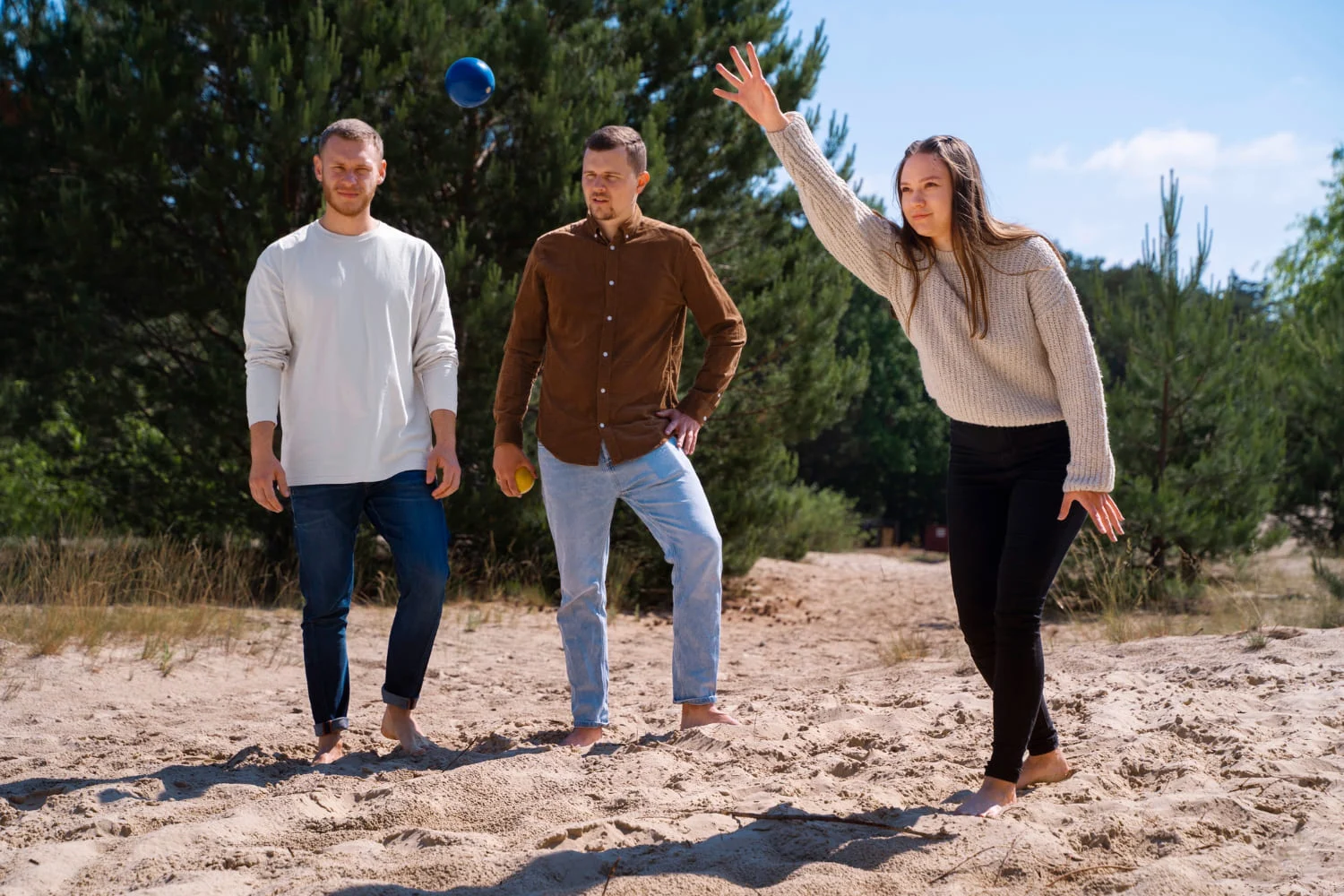
Acreage will do more for you than amenities. Groups need enough ground to genuinely lose sight of each other, and most hotel grounds can’t offer that. Our sixty-three acres back onto national forest, so a solo sit here doesn’t turn into twelve people pretending not to see each other.
Five items to check before you sign:
- An acre per person, as a floor
- What borders the land, since that matters as much as what sits inside it
- Indoor gathering space that fits everyone at once when the sky opens
- Lodging on site, so nobody drives a mountain road at 11 p.m.
- Cell coverage, which tends to bother the person planning the trip more than anyone on it
If you want the indoor and ceremonial options too, our roundup of ten corporate retreat activities pairs well with the outdoor ones above.
When to Schedule an Outdoor Corporate Retreat
Book the retreat for the second week of a quarter. Whatever loosens up on a mountain fades faster than anyone expects, and those first weeks buy you more at the start of a push than during the scramble to close the books.
FAQ
How long should an outdoor corporate retreat last?
Two to three days. A single day buys activities and none of the unstructured evenings where colleagues open up. Past four days, returns drop off for most groups.
What if part of the team can't hike?
Publish trail distance and elevation gain in advance so nobody has to ask, and give every outdoor block a seated version. Fire cooking, stargazing, and solo sits demand nothing physical.
Do outdoor team-building activities work for remote teams?
Remote teams tend to get the most out of them. Colleagues who exist to each other as video tiles gain more from one weekend on a trail than from a year of standups.
How much does an outdoor corporate retreat cost per person?
Price lodging first, since it drives about a third of the total, then work outward from there. Cutting flights moves you toward the bottom of the published range faster than any other single decision.
What are good team building activities for work groups of under ten people?
Small groups do better with the quiet end of the list. Solo sits, the dawn hike, and a naturalist walk all suit six or eight people. Skip the route challenge, since it needs at least three competing teams to produce anything.
What outdoor team building activities cost nothing?
Walking one-on-ones, solo sits, stargazing, and a dawn hike need no equipment, no facilitator, and no line item. Restoration work is usually free too, though ask the venue first. That covers five of the eight.
When is the best season for a mountain retreat in North Carolina?
Late April through early June, then mid-September through October. Summer brings afternoon storms and humidity. Winter works with a shorter outdoor day and a warm room to return to, and bare trees open ridge views you can't get in August, though road access at elevation changes fast.