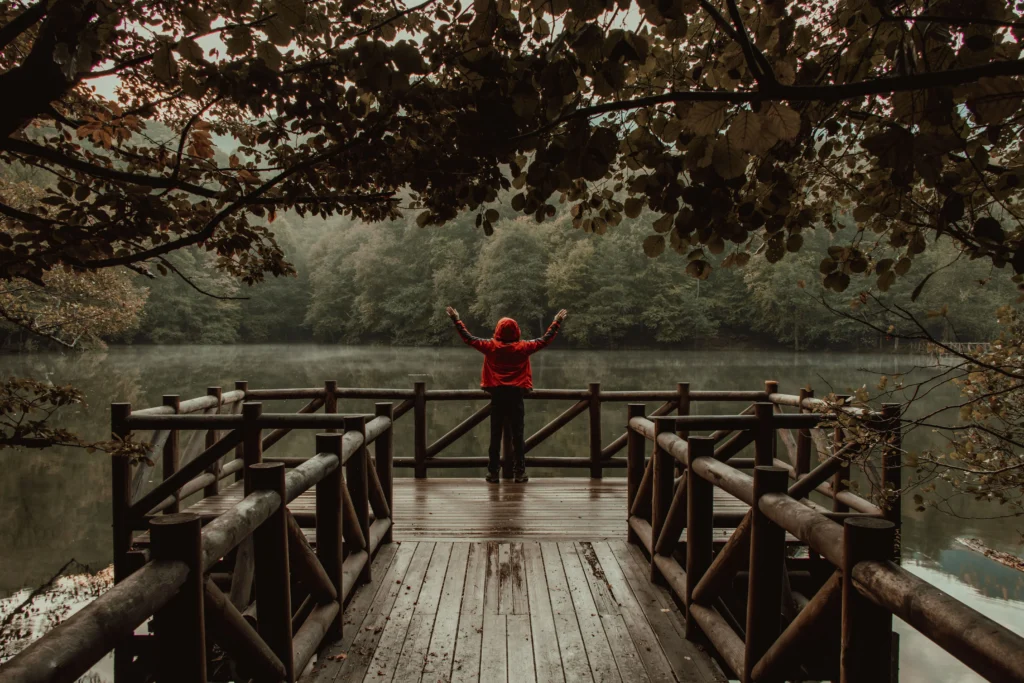
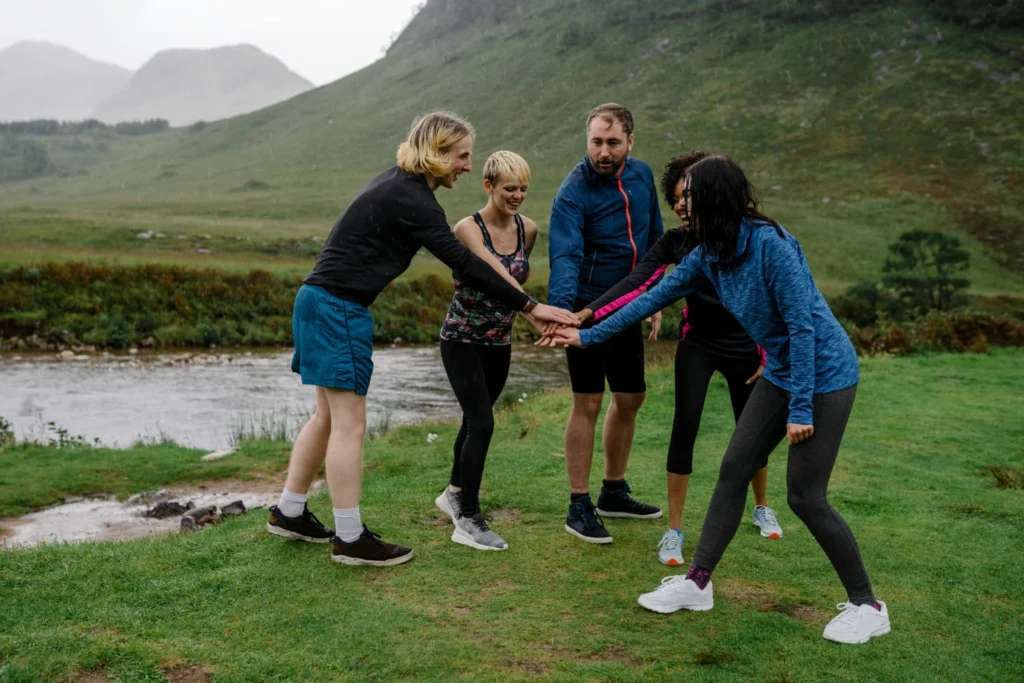
Most corporate team bonding involves pizza, a ropes course, or an awkward icebreaker game in a hotel conference room. None of it sticks. The corporate retreat activities that actually build trust, improve communication, and make your team genuinely want to collaborate happen when you pull people out of their cubicles and drop them somewhere they can’t check Slack every three minutes.
Key Takeaways
- Corporate retreats that blend physical, creative, and reflective activities produce stronger bonds than any single-format program
- Nature-based team building outperforms indoor exercises because it strips away office hierarchies and forces genuine interaction
- Meditation and breathwork have moved beyond wellness trends. They’re measurably effective at reducing team tension and improving group focus.
- Trust walks, campfire circles, and shared cooking challenges create the kind of vulnerability no PowerPoint can manufacture
- Executive teams benefit most from reflection-based activities that surface leadership blind spots in a safe, neutral setting
Why Your Team Needs to Leave the Office
Here’s the problem with traditional team building. It happens in the same environment that created the dysfunction. Your conference room still smells like Tuesday’s meeting. The same people dominate. The quiet ones stay quiet.
Corporate team building retreats work because geography forces a reset. Plant your sales team on a forested mountain trail and suddenly nobody cares who has the corner office. The playing field goes flat. And that’s where the real conversations start.
Research published in the Harvard Business Review has shown that off-site retreats produce measurably higher levels of psychological safety among participants compared to in-office team building programs. The reason is straightforward. Unfamiliar settings disrupt established social hierarchies and free people to interact without their default workplace masks.
Wheel of Bliss, a 63-acre retreat center nestled in North Carolina’s Blue Ridge Mountains, was built for exactly this kind of recalibration. Streams, forest, ceremony spaces, and zero cell signal create the conditions where teams actually reconnect. If your organization hasn’t explored wellness-based gatherings before, learning what is a wellness retreat can help clarify what to expect and why it works.
1. Guided Group Meditation
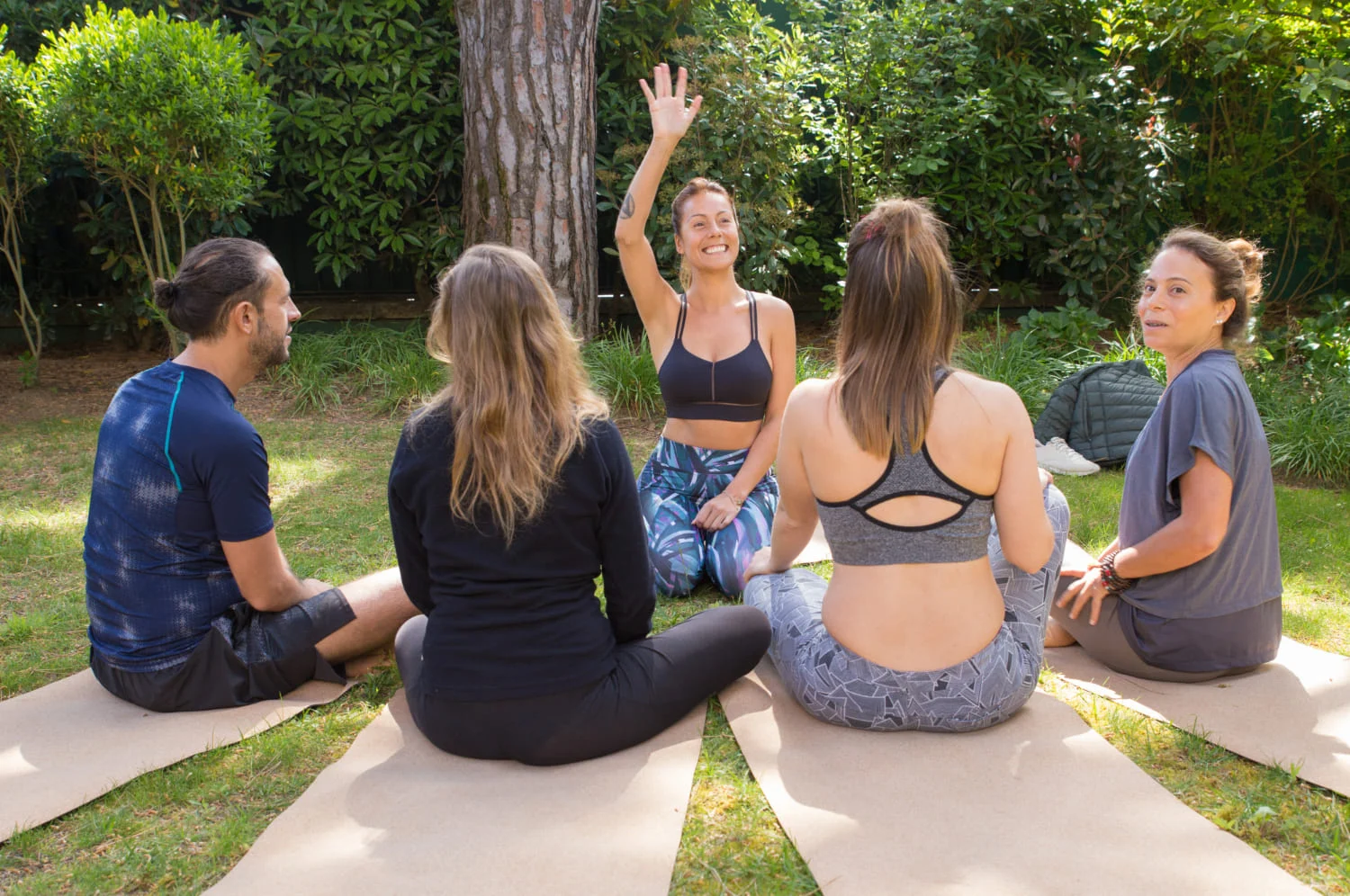
Don’t skip this one just because your VP of Sales rolls their eyes at the word “meditation.” Guided sessions of 10 to 20 minutes give overstimulated professionals a collective experience of stillness that resets the entire room.
The result?
People listen better for the rest of the day. Attention sharpens. Conversations slow down enough to actually go somewhere. Best suited for high-stress departments with short attention spans and long meeting calendars.
2. Blindfolded Trust Walks
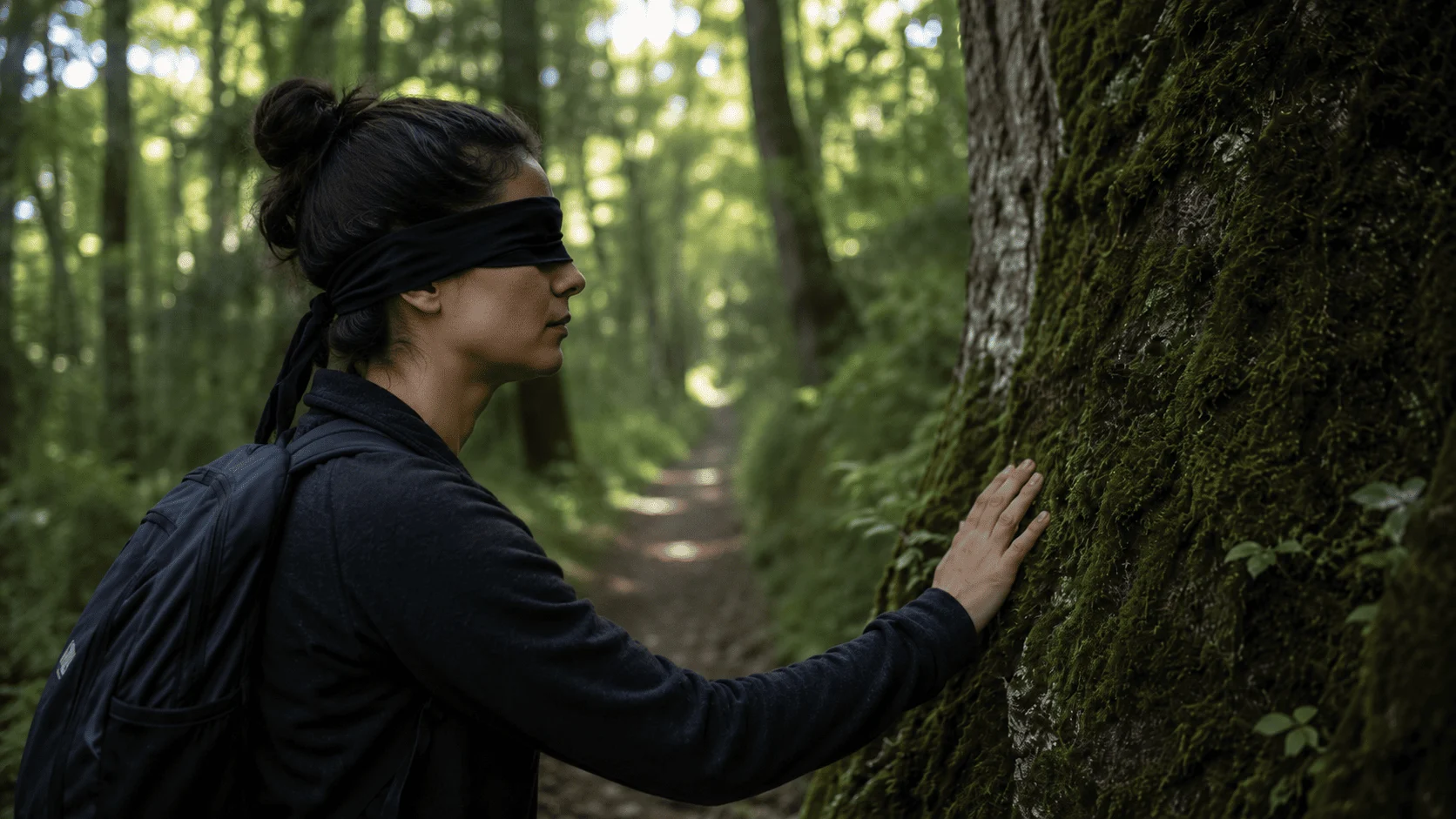
Pair up team members who don’t normally work together. One wears a blindfold, the other leads them through a nature trail using only verbal cues. Sounds simple. It isn’t. This exercise exposes communication gaps in minutes and builds the kind of literal, physical trust that no trust-fall exercise has ever delivered. Swap roles halfway through and watch an entirely different set of dynamics emerge. Ideal for cross-functional groups of six to twenty.
3. Team Breathwork Sessions
Conscious breathing in a group setting creates a communal physical experience that bypasses small talk entirely. Techniques like box breathing or guided pranayama drop cortisol levels fast and open space for honest conversation afterward. Something about breathing in sync with twelve other people strips away the professional armor. Titles stop mattering. The room softens. This one works especially well for departments dealing with burnout, post-merger tension, or leadership turnover.
4. Campfire Sharing Circles
Build a fire. Sit around it. Talk.
That’s the whole format. And it works because campfire light and cool mountain air lower defenses in ways a conference room never can. Senior leaders and junior employees end up sharing personal stories, career fears, and honest feedback with a rawness that office culture suppresses. Perfect for any size group, but especially powerful for cross-departmental teams meeting face to face for the first time.
5. Problem-Solving Trail Challenges
Map out a hiking route and embed team-based obstacles at specific checkpoints. Navigation decisions, resource allocation riddles, timed physical tasks. The team has to collaborate under mild pressure with no access to their phones or laptops. Think of it as a live-fire drill for team dynamics, and expect it to reveal leadership patterns faster than any personality assessment ever could.
6. Silent Forest Bathing
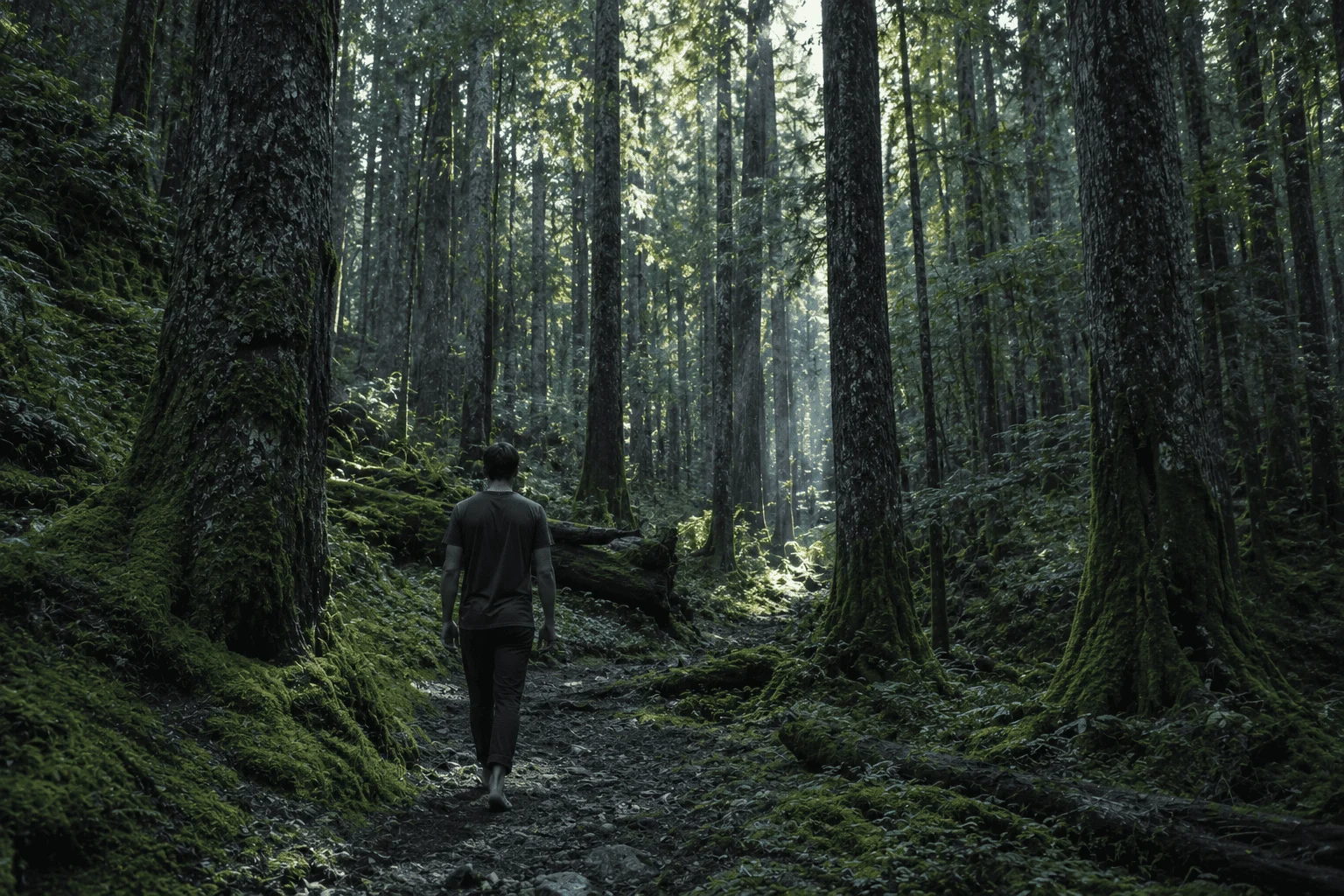
Zero talking. Zero phones. Ninety minutes of slow, mindful walking through old-growth forest.
Forest bathing (shinrin-yoku) comes from Japanese wellness culture and carries peer-reviewed backing. A 2019 study in Environmental Health and Preventive Medicine documented reduced cortisol and improved mood states among participants after just two hours of forest exposure. For departments dominated by loud voices, the enforced silence equalizes the room and gives introverts space to lead. Most participants report the silence felt uncomfortable for the first ten minutes and revelatory by the end.
7. Collaborative Vision Boarding
Hand your team art supplies, magazines, markers, and a blank poster. Ask them to build a visual representation of where they want the team or company to be in 12 months. It sounds like a kindergarten project. It produces surprisingly honest conversations about priorities, fears, and misaligned expectations that never surface in a quarterly review. The visual format also cuts through corporate jargon and forces people to communicate in images and emotions, not bullet points. Works best for leadership circles and newly formed project groups of five to fifteen.
8. Outdoor Cooking Challenges
Split into groups. Give each one a set of ingredients, a fire pit, and 90 minutes. No recipes allowed. The parallels to workplace collaboration are obvious but still hit hard when you’re watching them play out in real time. Someone has to delegate. Someone has to improvise. Someone has to do the dishes. And the group that communicated best almost always eats best. Fits 10 to 30 participants and always ends with a shared meal, which is its own quiet form of bonding.
9. Sound Healing Circle
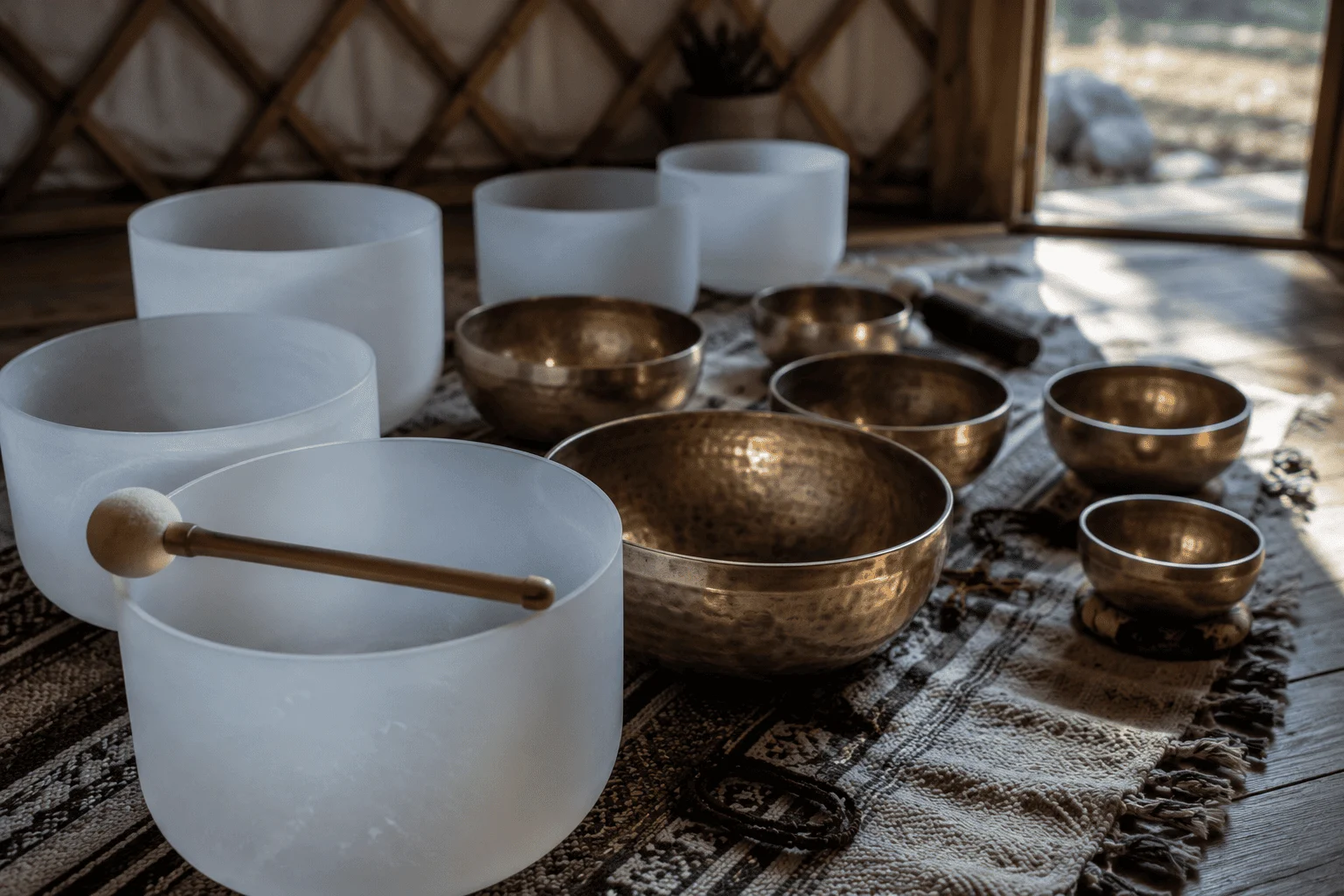
Crystal bowls, Tibetan singing bowls, and gongs played in a group setting for 30 to 45 minutes. Participants lie down, close their eyes, and let the vibrations do the work. Skeptics are welcome. Most leave as converts. Sound baths reduce physiological tension fast, and the shared vulnerability of lying on the floor next to your coworkers creates a bond nobody saw coming. Best for executive teams and high-performance groups under chronic pressure.
10. Leadership Reflection Rounds
Structure a guided conversation where each leader reflects on their management blind spots, communication style, and how their team experiences their leadership. This isn’t a feedback session. It’s a self-assessment circle with facilitator support. Uncomfortable? Absolutely. And that’s exactly the point. Executive team building retreats live or die on moments like these, and the teams that lean into the discomfort leave with clarity no 360 review can replicate.
Quick Reference
| Activity | Best For | Group Size | Key Outcome |
|---|---|---|---|
| Guided Meditation | High-stress groups | Any | Improved focus and listening |
| Blindfolded Trust Walks | Cross-functional pairs | 6-20 | Communication and trust |
| Team Breathwork | Burned-out or transitioning teams | 5-30 | Stress reduction, openness |
| Campfire Sharing Circles | Cross-departmental groups | 8-25 | Honesty and connection |
| Trail Challenges | Competitive departments | 8-30 | Collaboration under pressure |
| Silent Forest Bathing | Teams with dominant voices | Any | Equalizing, mental clarity |
| Vision Boarding | Leadership or new project teams | 5-15 | Goal alignment |
| Outdoor Cooking | Any (10-30 people) | 10-30 | Delegation and improvisation |
| Sound Healing Circle | Executive or high-pressure groups | 5-20 | Tension release, bonding |
| Leadership Reflection Rounds | Senior leadership | 4-12 | Self-awareness, accountability |
These team building activities for work retreat settings succeed because they pull people out of their default roles and force honest engagement. Centers like Wheel of Bliss host retreat events designed for corporate groups who want more than paintball and PowerPoints.
FAQ
How long should a corporate team building retreat last?
Two to three days is the sweet spot. One-day corporate team building retreats can work for smaller teams, but the deepest results come from multi-day programs where relationships have time to build outside of scheduled activities.
Are team building activities for work retreat settings effective for remote teams?
Especially effective. Remote teams that rarely meet in person benefit enormously from retreat activities held in a natural setting. The communal experience of hiking, cooking, or breathing together creates bonds that months of video calls simply can't replicate.
What makes executive team building retreats different from standard corporate retreats?
Executive retreats lean harder into reflection, self-assessment, and candid leadership conversations. Activities like leadership reflection rounds and sound healing circles work particularly well at this level because they create space for vulnerability that the C-suite rarely permits.
How do you choose the right location for a corporate retreat?
Look for properties that offer a mix of indoor and outdoor spaces, natural seclusion, and purpose-built gathering rooms. A remote mountain setting with dedicated ceremony or meeting spaces, private lodging, and minimal digital distractions gives your team the best conditions for genuine connection.